Sunday, September 23, 2012

Off to the Amazon!

These first two weeks of classes have flown by, and I can't believe we're already leaving tomorrow for our second excursion - 8 days in the Amazon! We'll be staying at Tiputini Biological Station which is in Yasuní National Park, and doing all sorts of activities such as tapir observing and monkey species counts. I'm pretty stoked.
I've adjusted to living with a new family, and am really enjoying being able to experience Ecuadorian culture as a family member. My host mother and I have bonded over cooking, and take turns sharing recipes with each other. So far, we've made chocolate chip banana bread, chocolate chip cookies and pesto (from my recipes) and llapingachos and viche from her recipes.

Cooking llapingachos together

 Llapingachos - potato/cheese pancakes covered in a peanut sauce, served with sausage, salad, and a fried egg. It's a classic Ecuadorian dish, and is delicious!

Classes have also been keeping me busy. We have classes from 8-1pm Mon-Wed, Fri, with day-long excursions on Thursdays and afternoon museum visits on Tuesdays after class. We visited an organic farm last Thursday, and went to the Páramo (an ecosystem high up in the mountains) this past Thursday. 
Last weekend, a few friends and I did a weekend trip to Baños, a nearby town famous for its extreme sports and hot springs. We spent our time mountain biking to waterfalls, going to the hot springs, white-water rafting, and wandering around the market trying new foods such as banana empanadas. 


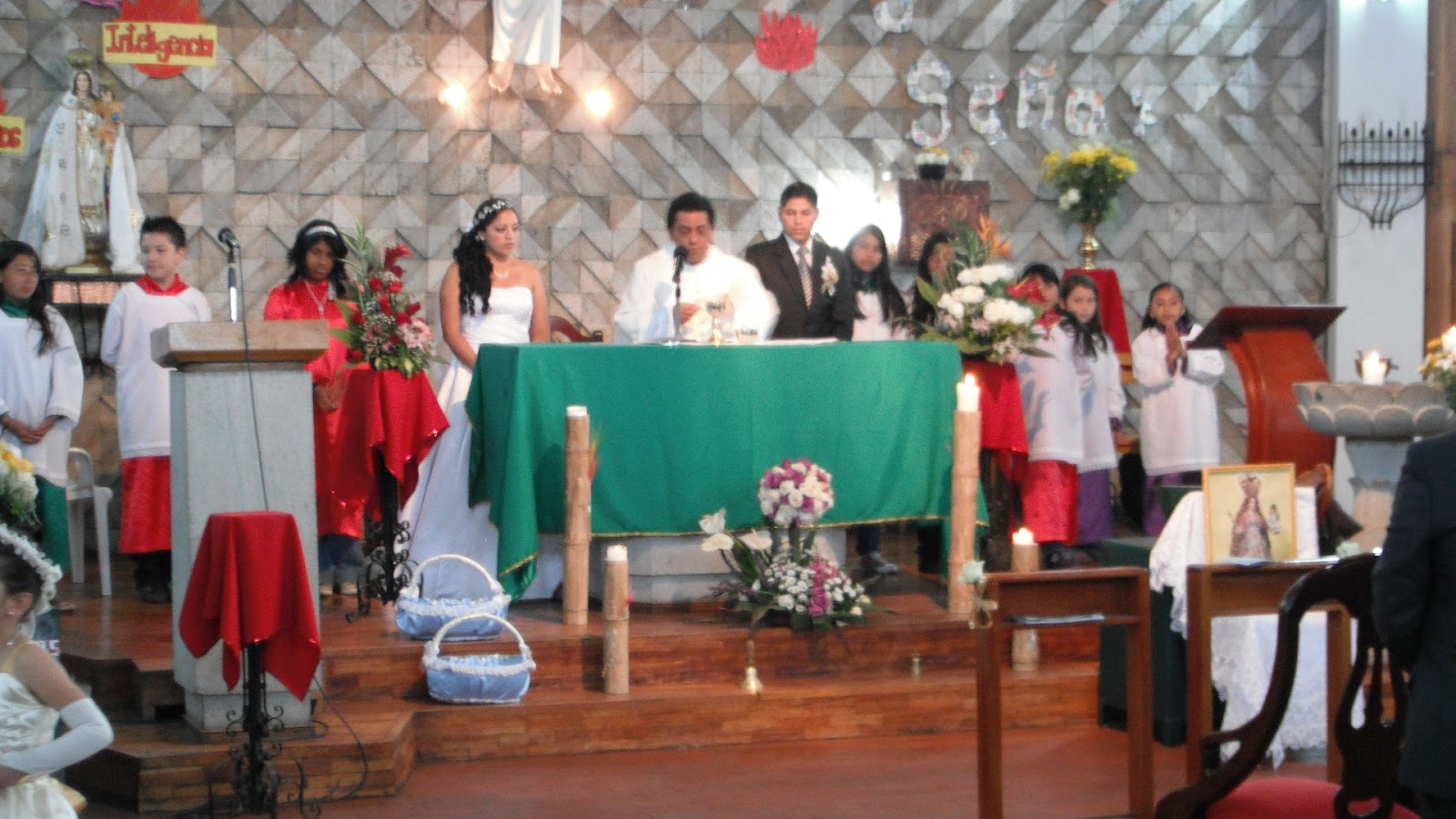
Last night, my family and I went to a wedding in the southern part of Quito. It was quite different from any wedding I have ever been to, but my family also told me that it was unlike typical Ecuadorian weddings. There were two dances that took place in the middle of the ceremony, and anyone could stand right up next to the bride and groom during the ceremony to take pictures and watch. At the reception, we had dinner at 11:30pm. Although we were hungry for most of the reception, I enjoyed spending time with my family and learning how to dance merengue. 


My mom, grandma, host brothers, and older brother's girlfriend


At the reception

Unfortunately I'm in a rush with leaving tomorrow for the Amazon (or the Oriente, as they call it in Ecuador), so I'll have to leave more details about Ecuador for next time. 


Sunday, September 9, 2012

First two weeks in Ecuador!


I'm back from my 8-day excursion to the Intag cloud forest of Ecuador! But I’ll start from the beginning, when I arrived in Quito.

My flights from Cusco to Quito went smoothly, and I actually met 3 other students who are in my program while waiting in line to go through immigration. We were picked up by our program directors and then taken to a hostel in downtown Quito, where we would stay for the first week during orientation. This week was incredibly hectic, with tons of information being thrown at us and at the same time preparing for the first of our three ecological excursions of the semester. Additionally, the hurricane in Miami delayed the flights of nearly half the students, so those arriving on Monday and Tuesday missed parts of orientation.

On our first full day in Ecuador, we had a “drop-off” in the city where we all had to explore on our own for 3 hours. The bus system here is a little more confusing than in Cusco, but I managed to figure it out (sort of) after a while. We also got placed into our respective Spanish classes after having interviews. Each class only has between four and six students in it, which is great for individual attention. Later in the week, our Spanish classes went on a day-trip up to a reserve in the mountains, where we learned specific Spanish terminology relating to ecology.

My first meal in Quito - shrimp and rice at a Cevicheria (probably the best meal I've eaten here)

My Spanish class


Even after a week in Quito, I still feel like I don’t know the city very well (probably because our days were jam-packed with activities and lectures mostly in the hostel). However, I can definitely say that Cusco and Quito are two completely different cities. Quito is much larger and more modern, with tall buildings and a more complex public transportation system. I also feel like the Incan influence is stronger in Cusco, which can be seen through the clothing that people wear and the kinds of stores that line the streets.


On Saturday morning, our group left for the Intag cloud forest. After 6 hours in a bus, we arrived at La Florida, a farm owned by a couple from the US who moved to Ecuador about 30 years ago. For the next three and a half days, we had an incredibly busy schedule of classes/lectures/activities – all outside! Here’s one example of what a day was like in the cloud forest : 6-8am – bird watching. 8-9am – breakfast. 9-10am – lecture about the cloud forest. 10-12pm – nature hike. 12-1pm – lecture about mining. 1-2pm – lunch. 2-4pm – botany lessons. 4-6pm – setting up mist nets to catch birds. 6-7pm – nature drawing class. 7-8pm – dinner. 8-9pm – light trapping insects. Definitely a busy day, but a nice break from traditional college classes! All of the food we ate at La Florida was organic and vegetarian, and most of it came from the farm itself. I got to try a bunch of delicious foods, such as Peruvian ground cherries, naranjilla juice, and grilled burgers made from green plantains.

Peruvian ground cherries

Our 'classroom'

Learning how to record birds once we've caught them in the mist nets


Mist netting class

Botany class

Catching dragonflies for my field investigation project

The next three days were spent at rural home stays in a small village called Plaza Gutierrez, which is an hour and a half walk from La Florida. Each of us was assigned a different family. I lived with a woman named Fabiola, her eight-year-old daughter Kati, and Kati’s grandparents. All of the women in the community are weavers, and use a plant called cabuya to make hats, bags, belts, etc. They were taught how to weave 16 years ago by an American woman named Sandy who lives on La Florida. Sandy wanted to give the women (who didn’t have any professional skills) a trade so that they could better support their families and become more independent. Since then, the women have formed an organized group of weavers capable of making a living.
The three days living with the family was interesting and fun, but different from any experience I’ve had. The whole family sleeps in one room, and the kitchen consists of a small stove. They have a variety of farm animals including pigs, chickens, cows, cats, a dog, and a horse. The chickens, cats, and dog routinely came into the kitchen and would jump/fly onto the table while we were eating. My host sister went to school in the mornings, and while she was away, Fabiola and I would do dishes, cook meals, and weave. She taught me how to make a bag out of cabuya, which was really fun. On one of the afternoons, Kati and I went for a horseback ride up the mountain and picked blackberries together. Another afternoon, Fabiola and I met up with another family to cut plantains, yucca, and lemons with a machete from a farm. It was really nice to get a glimpse of what this lifestyle is like through experiencing it for a few days.

My host grandmother spinning cabuya

My host sister and her friends (she's in the orange)


Their yard


Trying to ride a llama....

Crocheting my bag

My host mom and the bag she helped me make

After the home stay (and a horseback ride back to the farm), our group of students participated in a “minga”, which is a Quechuan word for an event where everyone in a community works together on something, such as a barn raising. Whenever we have an excursion somewhere, we always work for a day doing something the community needs done to give back to the locals. Near La Florida, we helped with a bridge construction by moving rocks out of a river to use on the bridge. We also did some work in a botanical garden.
The next day, we left early in the morning to head back to Quito. We arrived in the afternoon, and the rest of the day was spent showering (much needed after 8 days), eating dinner, and hanging out. The following day, we met our semi-permanent host families, with whom we will be living for the next two months! This morning, my host mom and one of my host brothers picked me up from the hostel. I have two parents and two brothers (Martin and Daniel), aged 18 and 22. They all seem very nice, and I have been warmly welcomed into their home as part of their family. They live a 10-minute walk from the building where I have my classes every day, which I am very excited about. Almost all of the other students live 45 minutes to an hour by bus or trolley from class.

So far, Quito has been a blast, and I’m definitely looking forward to the rest of the semester!

Saturday, August 25, 2012

Last week in Cusco

This last week in Peru has been one of my busiest so far, but also one of the most exciting! My friend Hannah (from Austria) and I traveled to Puno for the weekend to go on a tour of Lake Titicaca. We left on Friday evening at 10pm to take an overnight bus to Puno from Cusco, which is about a 7 hour trip. Unfortunately, neither of us were able to sleep very well, and only got about 2 or 3 hours of sleep. We arrived at the bus terminal around 5am, where we were able to book a 2 day, 1 night tour leaving that morning. At 8am, our tour group got on a boat, and took off to see the man-made Uros Islands, Amantaní Island, and Taquile Island. After an hour on the boat, we reached the Uros Islands. These islands are made out of reeds from the lake, and are incredibly strange to walk on. Your feet sink down a few inches with every step as the reeds compress below you. Our guide explained in detail how the islands are constructed, and also how this construction is never finished. As reeds rot and decompose, more need to be secured into place to keep the islands in good condition. I was amazed to hear that over 2,000 people live on these islands, with about 5 families per island (most of the islands are very small, and take about 30 seconds to walk across). To get to school, the kids have to take 'taxi' boats to the larger floating islands. Also, the survival of these people entirely depends on tourism. The community practices "equal opportunity", and so tour groups rotate which islands they go to see so that those living on the islands have the same chance to make money.

The islands are made from these reeds

View of the Uros Islands

Explaining how the base of the island is created


Inside of a house


After spending a few hours on the Uros Islands, we headed over to Amantaní Island, one of the four largest islands in Lake Titicaca. We arrived around 1pm, where we were assigned "host families" that would feed and house us until the next day. Hannah and I were in a family with a mom, dad, and two daughters. The youngest daughter, Pilar, was four years old and quite a spunky, adorable girl!

Amantaní Island

Our host family

Pilar

Lunch of boiled potatoes, oka, and grilled cheese


That evening, our group hiked up to the top of the island. We watched the sunset from there, and also got some incredible views of the lake. 


A stone wall near the top of the island


When we got back, our host families dressed us up in traditional Peruvian clothes, and took us to a building on the central plaza to dance. I think I would have enjoyed this more if I had gotten more than 2 hours of sleep the night before....


The following day began bright and early at 6am, since we had a 3 hour journey by boat to get to Taquile Island. Once we arrived, we walked for about an hour to the central plaza, and then another 45 minutes or so to the top of the island. Here, we were given another talk about the culture and lives of those living on these islands. 


From here, we walked back down into town, ate lunch at a local restaurant, and then began the boat ride back to Puno. After the tour was over (around 4pm), Hannah and I walked around town for a while before eating a delicious dinner of alpaca steak and lomo saltado (a traditional Peruvian dish).


I then had to say goodbye to Hannah, since she was staying the night in Puno, traveling to Arrequipa the following morning, and then making her way to Lima to fly home. I took another overnight bus back to Cusco, and was fortunately able to sleep much better this time. I arrived a little before 5am, took a taxi back to my apartment, and slept a little while longer before getting up to work at Occopata that morning. Needless to say, I was fairly exhausted. 

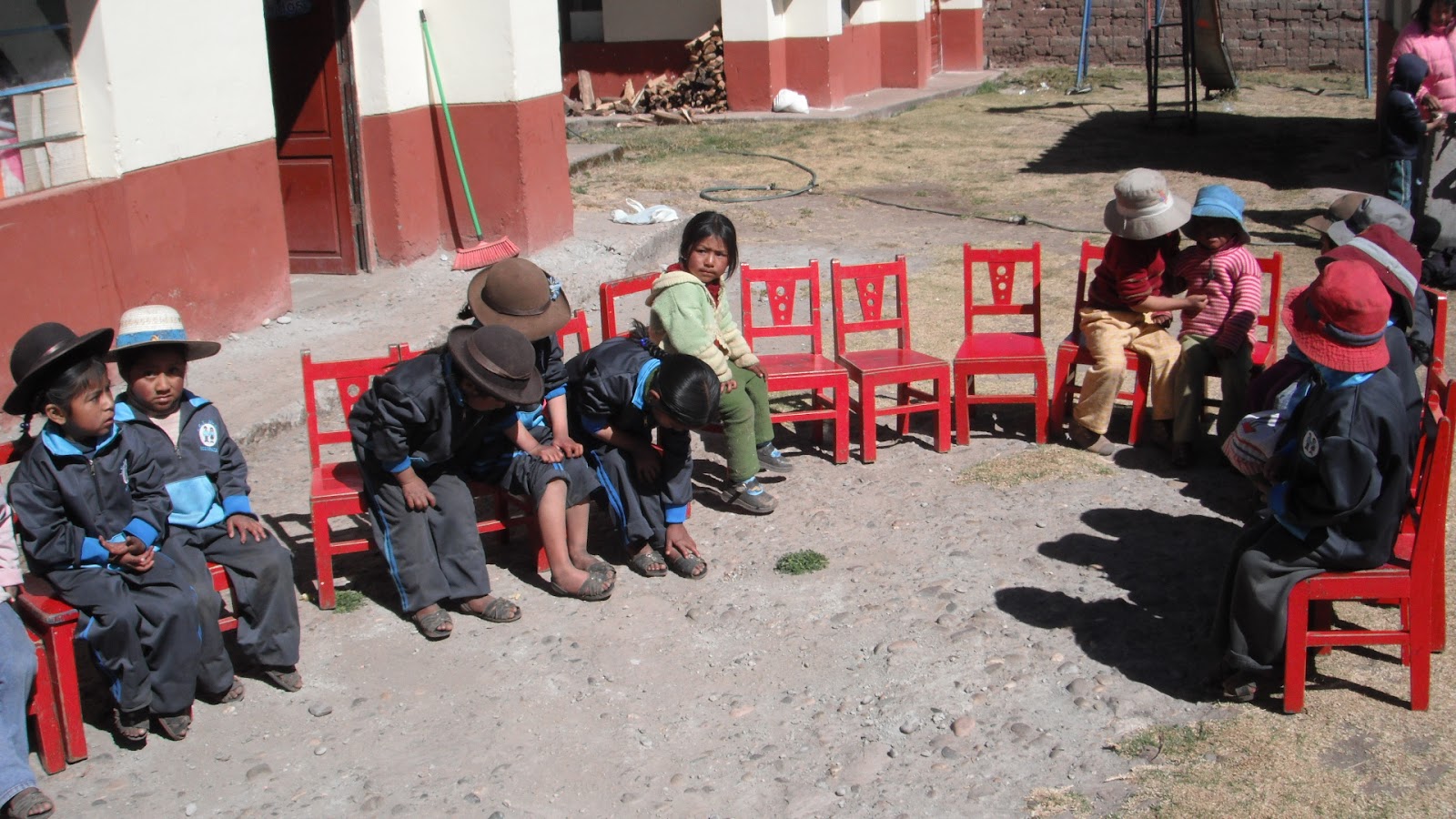
On Tuesday, Michael and I went up to Occopata to do some health campaigns in the schools. We first visited the Jardín, where we had originally treated the kids for scabies a few months ago. It was really great to see how so many of the children who were previously infected are now healthy! We also brought up wart treatment, and administered it to those who needed it. Afterwards, we all played jump rope with the kids, and then had tea and cookies in the classroom. The kids also gave Michael and I presents - egg cartons with a picture of a chicken on it :)


We then headed back to the clinic to enjoy some chocolate cake that Michael and I had brought up since it was one of my last days at Occopata. 


That afternoon, we went to the elementary/high school to give a presentation on alcohol and alcoholism, a huge problem in Occopata. Many of the fathers in Occopata are alcoholics and abuse their wives and children, which is really sad. After I leave, Michael will continue to give this presentation in different classes.


A few of the kids also had warts, and so we treated them as well.


Getting my hair braided by three girls who were fascinated with its color/texture.


The next day, we all got up very early to do house visits in the community of Mayrasco, which is below Occopata. I really enjoyed this, because we got to hike around in the mountains far above Cusco. The people who live far up in the mountains rarely come down to Cusco or go up to the health clinic in Occopata, and so the doctor and nurses have to walk to their houses. On Wednesday, the main purpose of our visits were to inform those who don't have health insurance that they need to go down to Cusco and fill out the necessary paperwork in order to obtain insurance. The insurance only costs about 10 dollars, but this is still a substantial amount of money for most of these people. 


Wednesday was my last day of volunteering, since I needed a few days to get ready to travel to Ecuador. I leave early tomorrow morning, and will be in Quito by 4 pm to meet the rest of the students in my study abroad program! I currently have very conflicting feelings about leaving Cusco - I have absolutely loved my three months spent here, and consider them some of the most eye-opening and rewarding months of my life. But at the same time, I can't wait to move on to Ecuador, live with a host family and study in Quito with other students. 
I will be continuing my blog in Ecuador, but as I will be a full time student, my blogs might become shorter and less frequent. I hope that this doesn't happen, but I know I will be gone for weeks at a time on ecological excursions and I may not have internet in my host family's home. I would like to thank everyone who has been reading my blog and supporting me during my time in Cusco - I love hearing your thoughts and insights through emails and comments in response to my blog posts.
When I get to Ecuador, our orientation begins immediately, and lasts about a week. Following this, we are going on a week-long excursion to the Intag cloud forest, so I won't be in contact much for the next two weeks. I hope you've been enjoying my blog for this first half of my journey, and I look forward to what the next four months bring!